

Partial SoFi, 12.08.2026
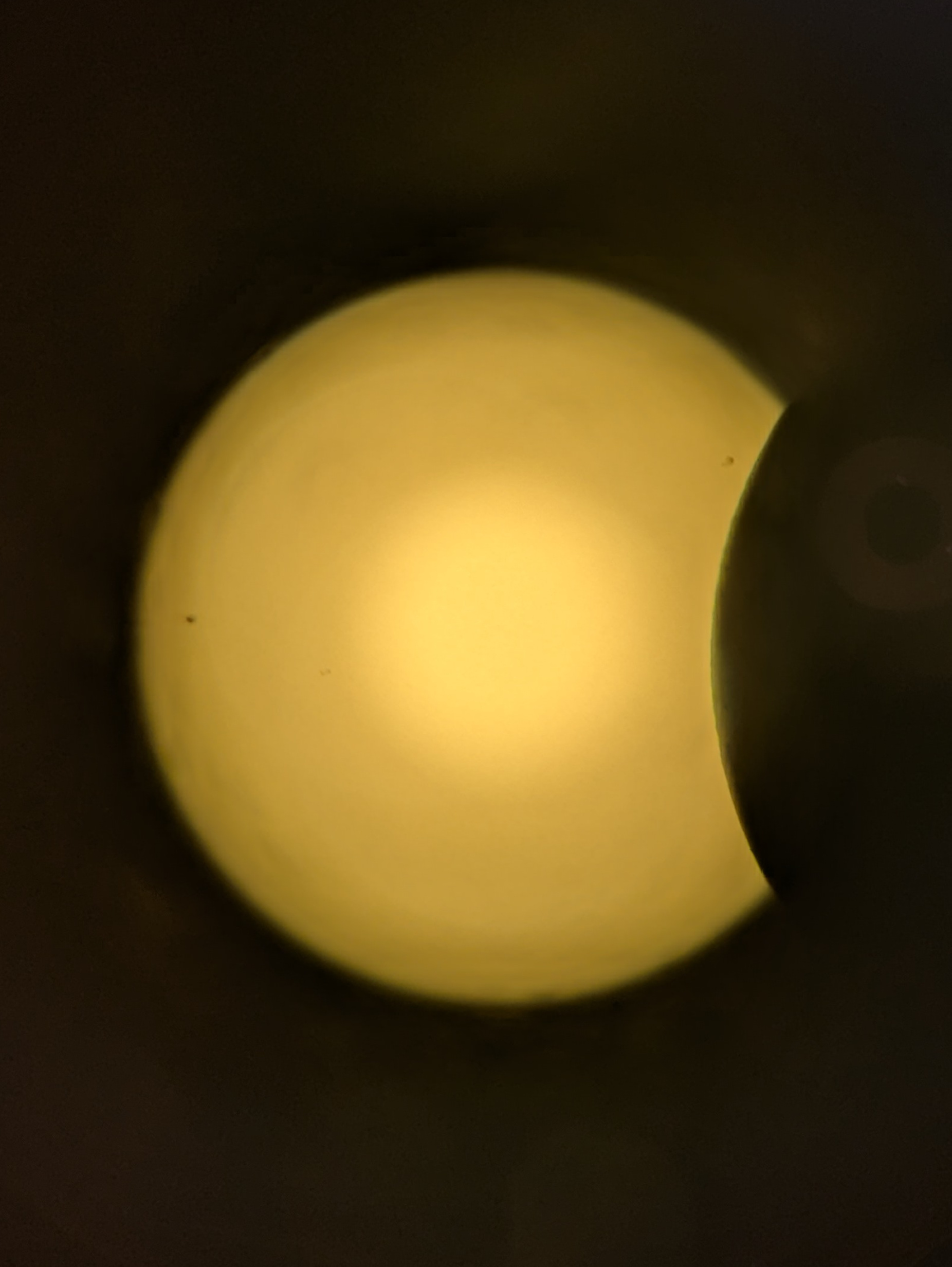
After a long time, there was a partial solar eclipse again today, with 87% coverage here in Hildesheim. A great opportunity for sidewalk astronomy!
At the Hildesheim Astronomical Society (HiGA e.V., https://astronomie-hildesheim.de), there were several groups: some were in the zone of totality in Spain, another group was in Lechstedt, and a third group was on the parking deck of the Arneken Gallery right in the middle of Hildesheim's city center. So it was a good opportunity to do a bit of public outreach again.
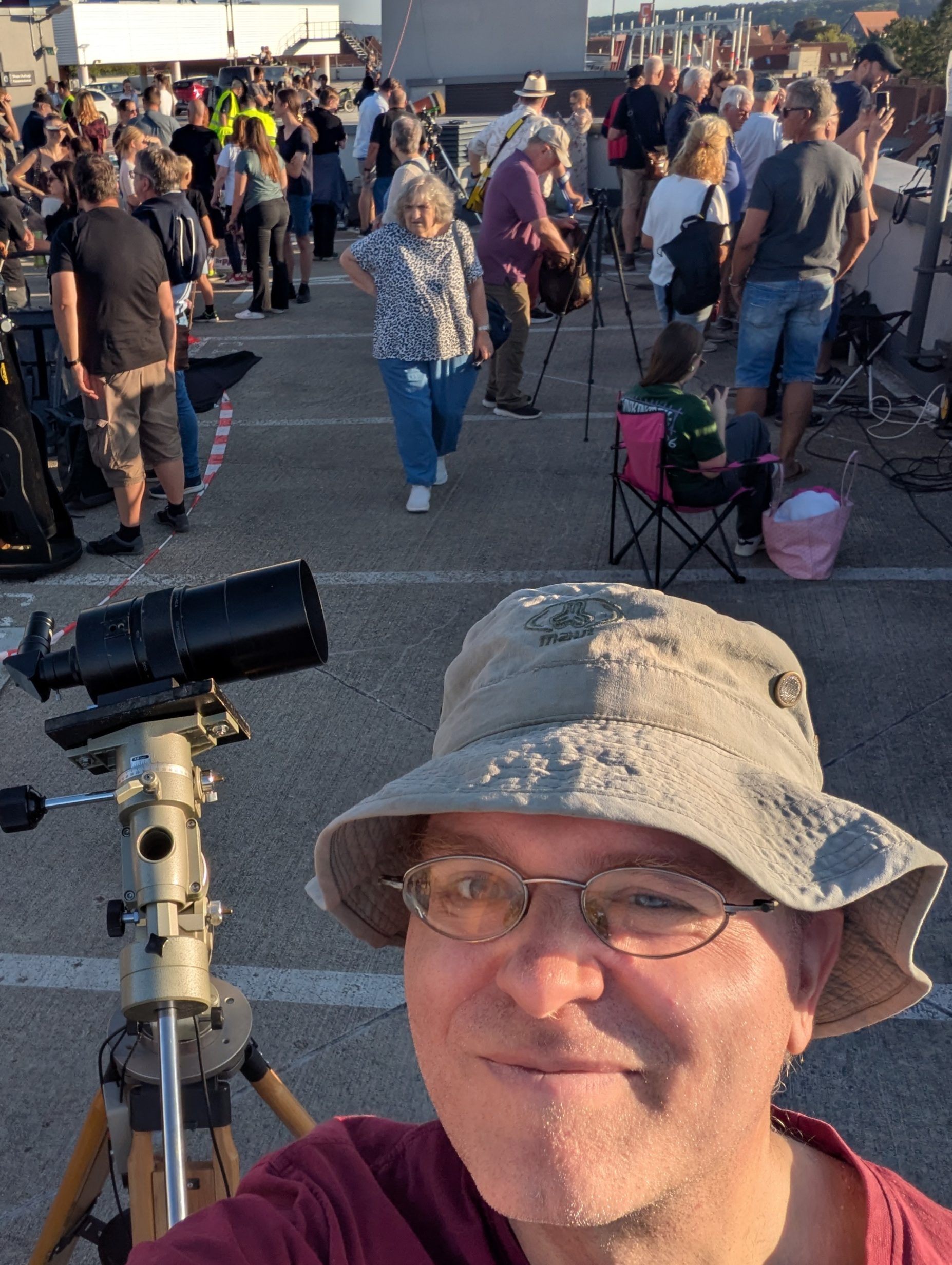
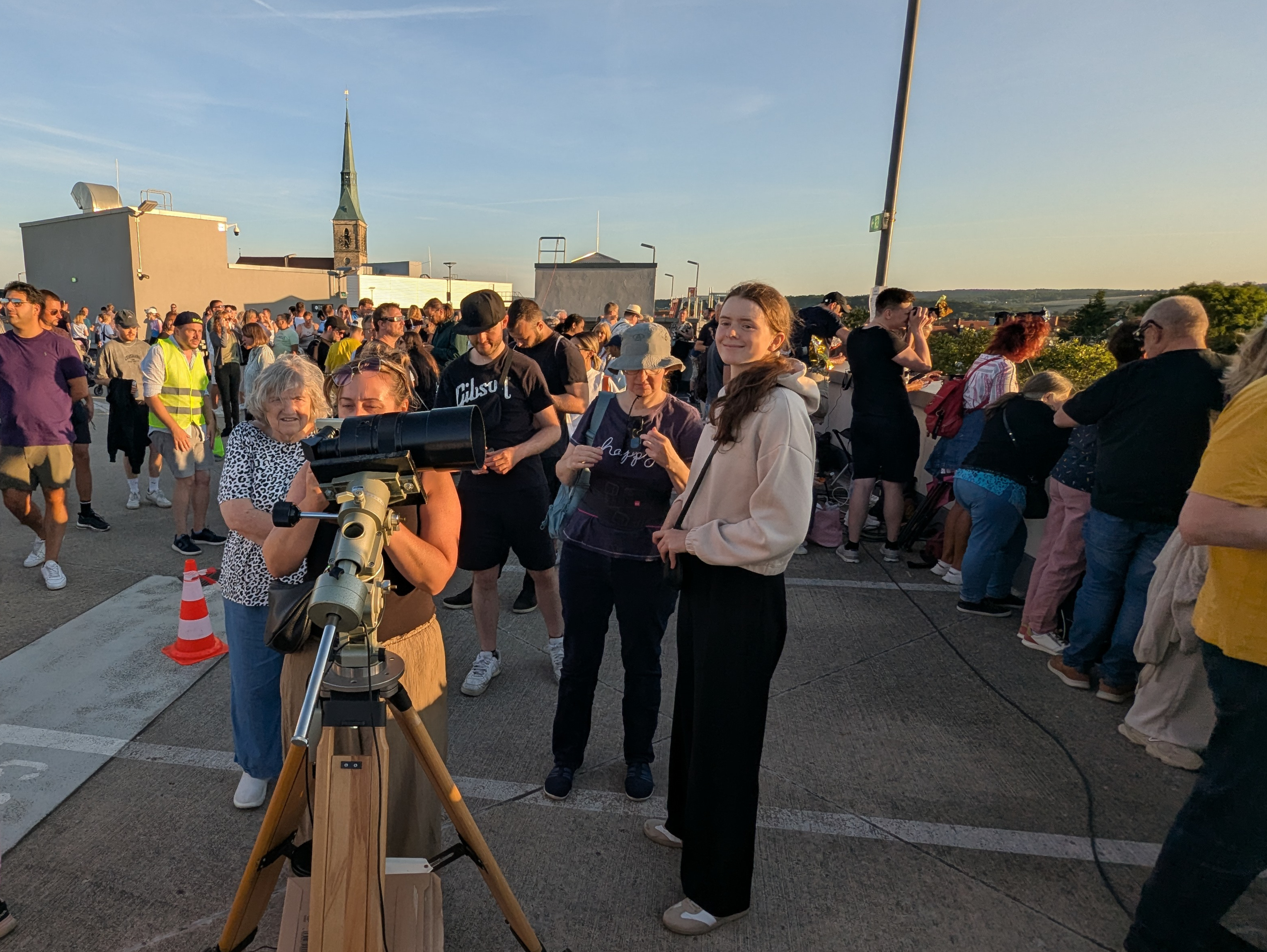
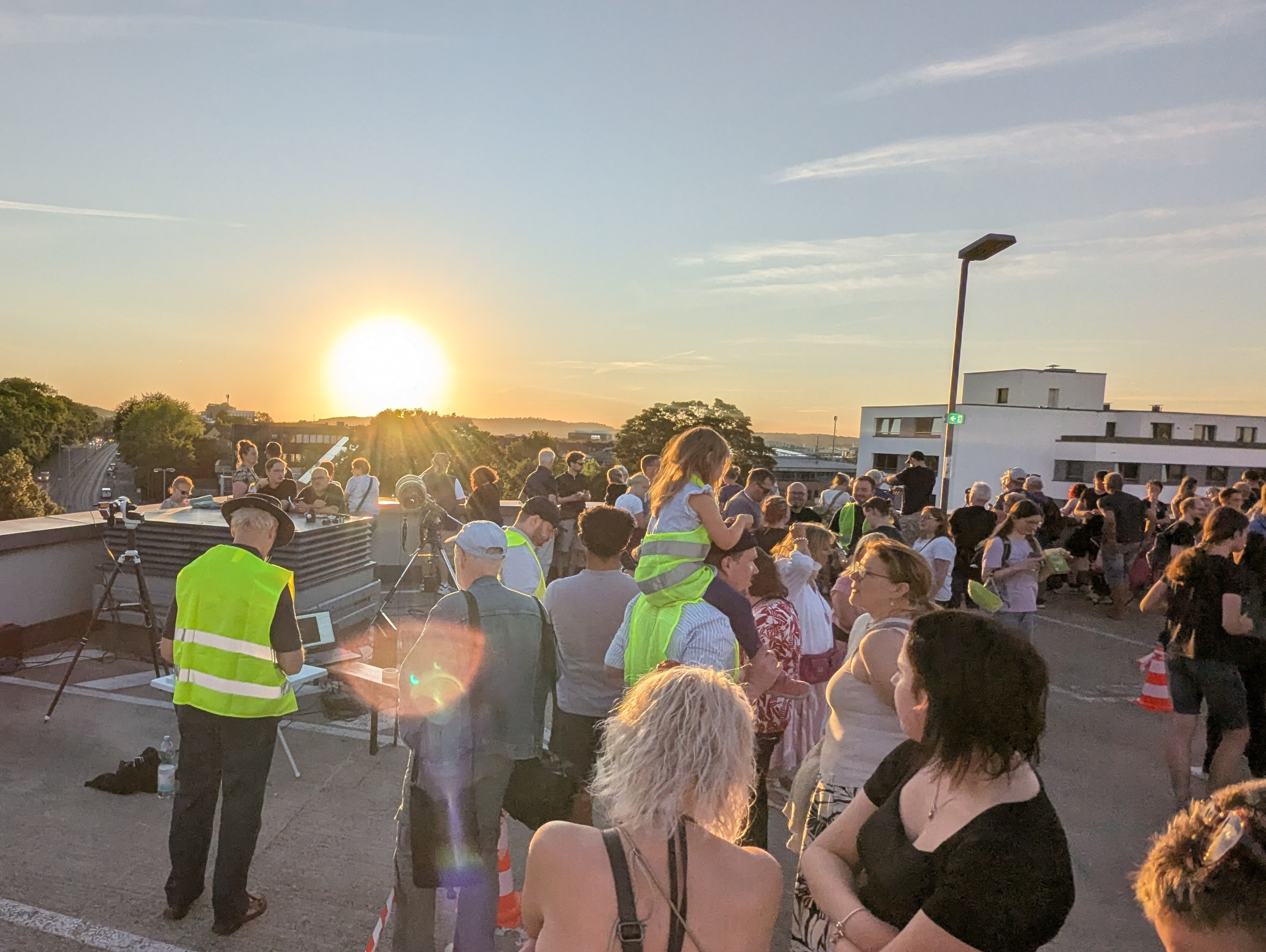
If you want to bring astronomy topics to people, it's not that easy: people naturally come to the observatory at the Gelber Turm in Hildesheim on their own; there we would have had a perfect view to the northwest, but the tower never fits as many people as typically show up for a solar eclipse. So it's better to go where people already are: while shopping, right in the city center. Since you typically don't have a good view of the horizon there, the idea came up to observe from the top parking deck of the Arneken Gallery. From there you get a perfect view over the city, there's plenty of space, and people can get there easily. So a small HiGA group was found who set up a pile of equipment.
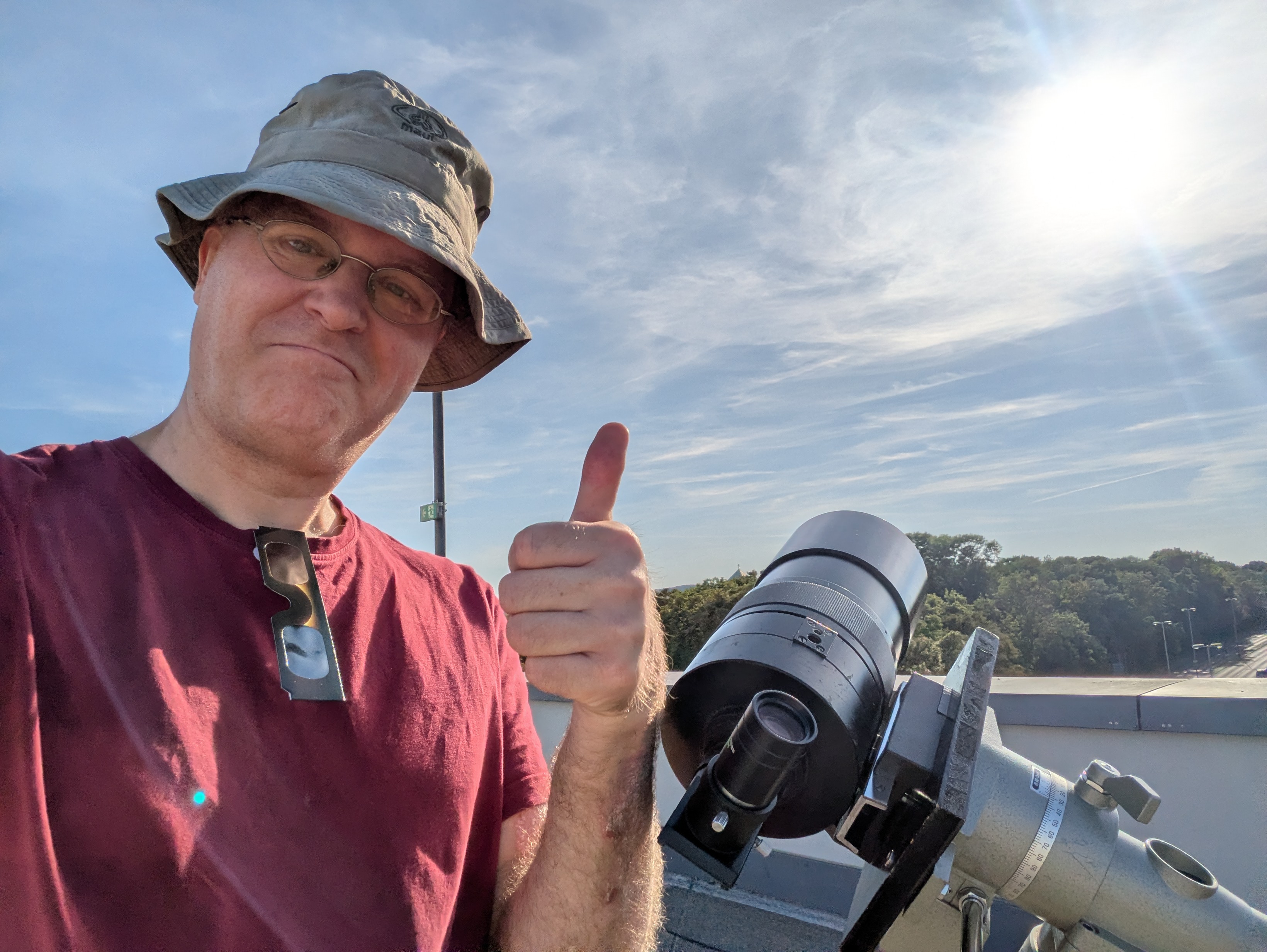
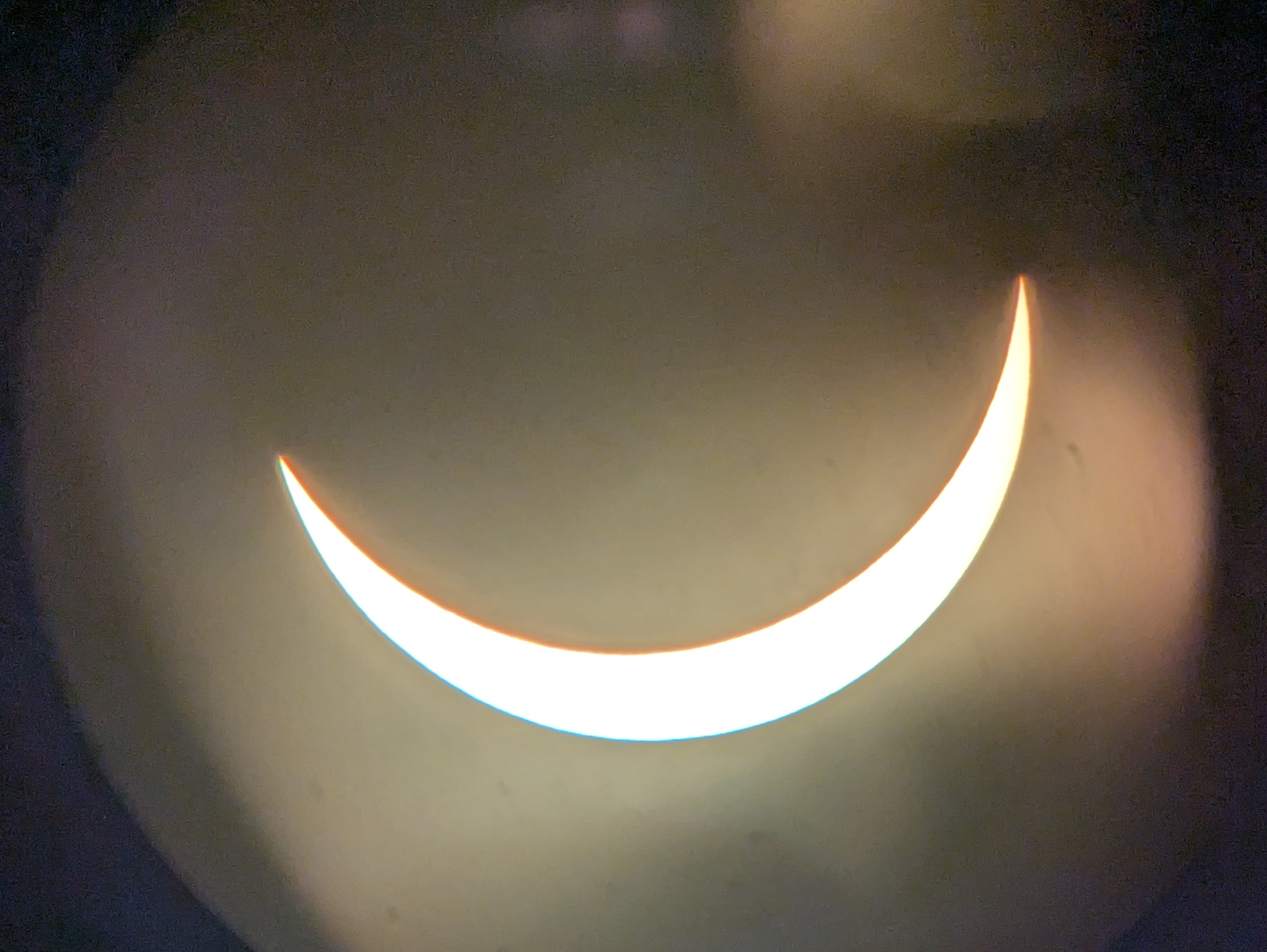
For events like this, I'm always more in favor of low tech. The more equipment and technology you bring, the more can go wrong, and honestly, perfect digital images aren't something that impresses anyone these days, since you see them everywhere on the internet anyway. So: look through the telescope yourself. With your own eye. No camera. That's why I chose the Super Polaris DX with battery and controller, along with the 10/1000 Maksutov with an objective solar filter and zenith prism, plus a wide-field eyepiece. The combination was perfect: set up in 5 minutes, everything worked flawlessly.
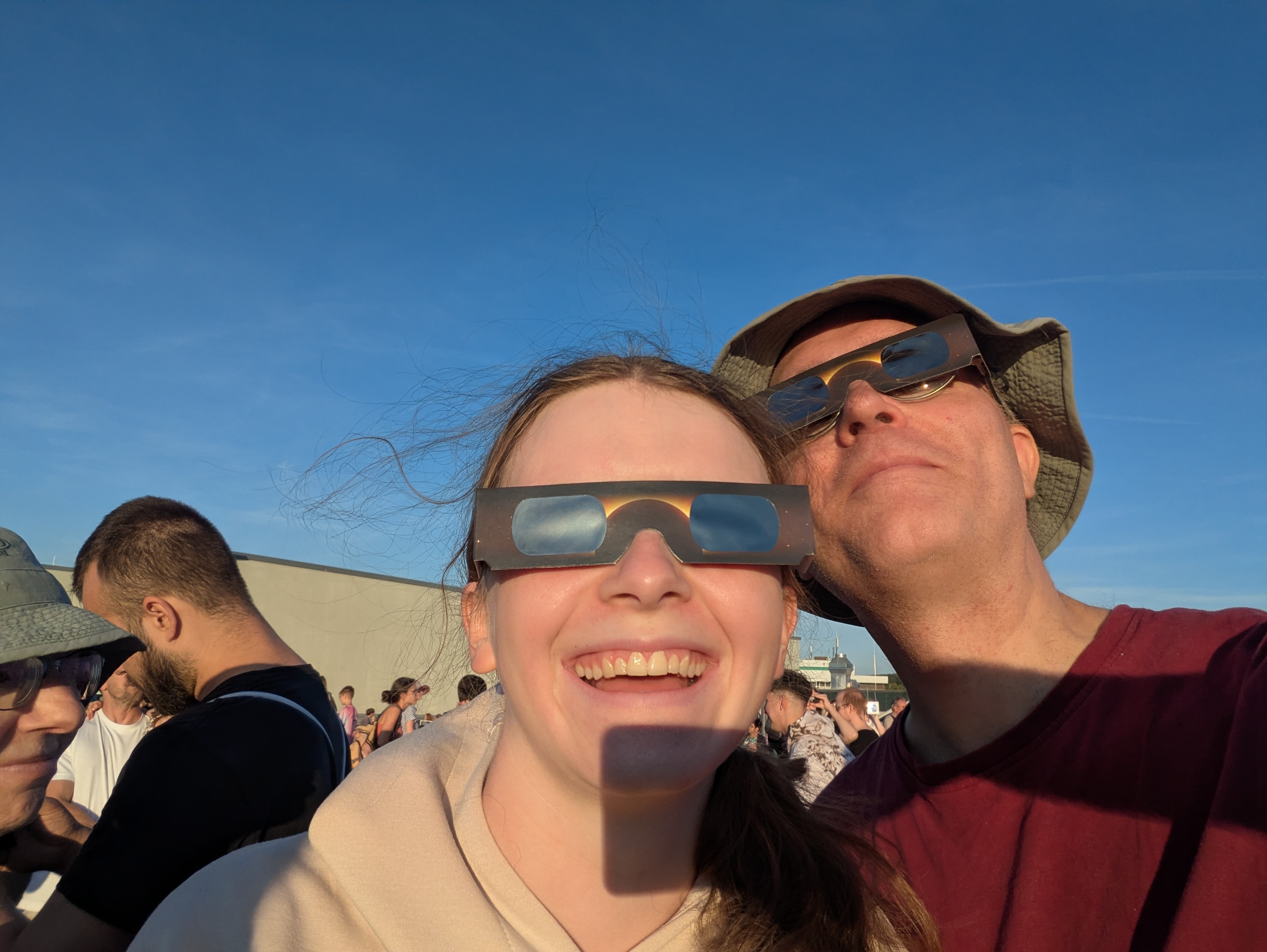
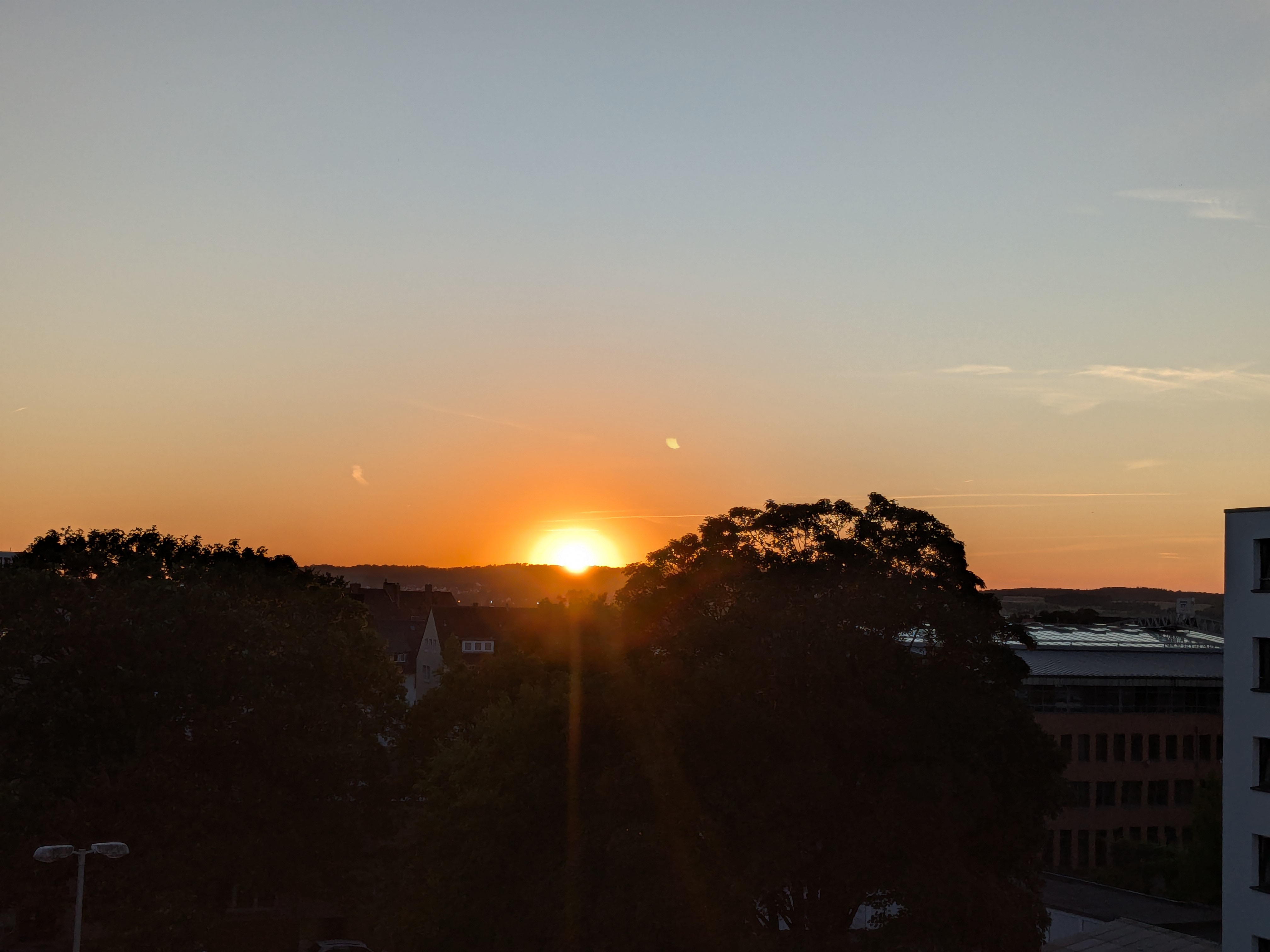
Starting at 6:00 PM, there was basically a continuous line of people, which only tapered off with sunset at 8:52 PM. The sun offered a varied program: there were sunspots, and you could talk about magnetic fields, fusion, and the solar wind. You could nicely see how the moon's edge isn't a perfect circle but has mountains and valleys; there were discussions about atmospheric effects and the different types of eclipses. And around maximum coverage at about 8:10 PM, you could beautifully see how the light became very flat and how you could suddenly make out the sharp-edged shadow of individual hairs, because the sun had suddenly become something like a point light source.
So, plenty of good opportunities to bring a bit of astronomy to people. A fantastic event, a great team, great visitors, wonderful atmosphere!